Hiring a car is the best way to see Cyprus at your own pace — Cape Greco and the Blue Lagoon, the Troodos mountains, the wine villages and the beaches of the east coast are all far easier with your own wheels. But if you are used to driving on the right, the headline is the big one: Cyprus drives on the left. Here is how to adapt quickly and drive the island with confidence.
Driving on the left — the basics
The car is right-hand drive, so the gearstick is to your left and you keep to the left-hand lane. The moments that catch people out are pulling out of junctions, roundabouts and the first few right turns across traffic — take them slowly. A useful habit is to say "keep left" to yourself when you set off and after every stop, and to let a passenger act as a second pair of eyes. If you can, spend the first hour on quieter roads near the airport before tackling a city centre, and give yourself extra room until it feels natural.
Roundabouts, motorways & road signs
- Roundabouts: traffic flows clockwise and you give way to vehicles already on the roundabout — those approaching from your right. Signal as you leave, and stay in the correct lane on the bigger multi-lane roundabouts.
- Motorways: the free A-road network links the island — the A1/A2 to Nicosia, the A3 to Ayia Napa, and the A5 towards Limassol, with the A6 continuing to Paphos beyond Limassol. They are modern and well surfaced.
- Signs and distances are in kilometres, and signage is in Greek and English, so place names appear twice.
- No tolls: Cyprus has no road tolls, so you can drive the motorways freely.
Speed limits, fuel & documents
| Point | What to know |
|---|---|
| Speed limits | Typically 100 km/h on motorways and 50 km/h in towns — always follow the posted signs; lower limits apply near schools and in villages |
| Seatbelts & phones | Seatbelts compulsory for all; no hand-held phone use; a low drink-drive limit is strictly enforced |
| Fuel | Petrol and diesel are widely available; many stations have 24-hour automated pumps that take cards, handy for early or late journeys |
| Licence | EU and UK licences are accepted; an International Driving Permit helps if yours is not in the Latin alphabet |
| Children | Child seats are required for young children — book them with the car in advance |
Parking in towns
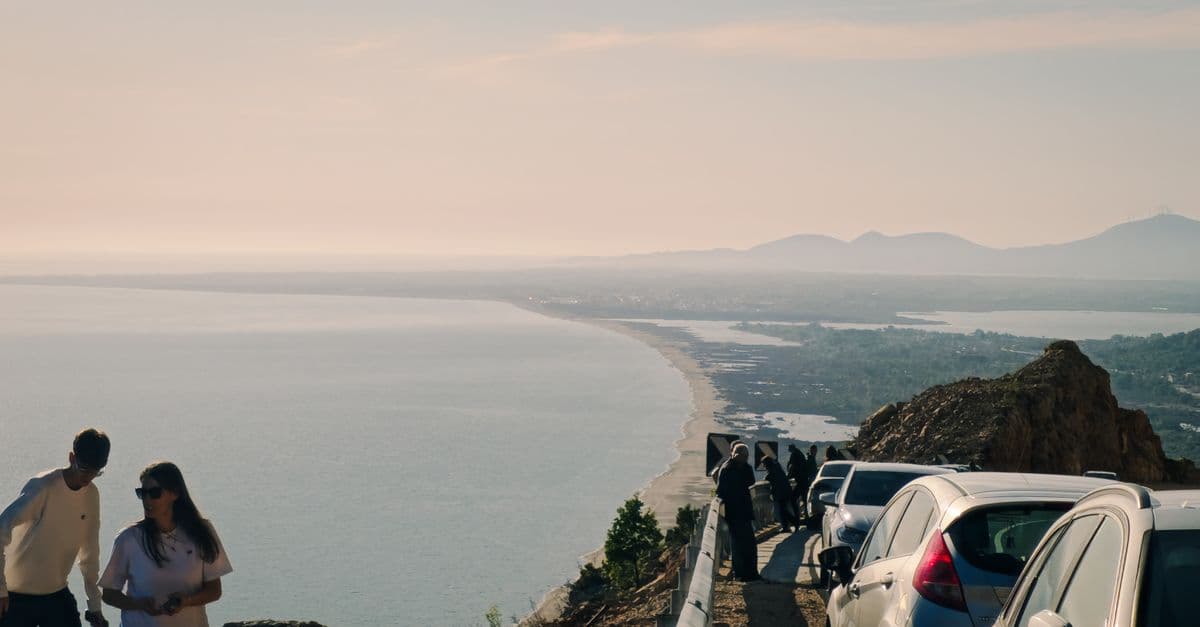
In Larnaca and the other towns, use the marked car parks and paid on-street bays rather than improvising — parking rules are enforced, and kerb markings indicate where you can and cannot stop. The seafront areas fill up in summer, so arrive early or use an off-street car park. Never leave valuables visible in a parked car, especially at beaches and trailheads.
Mountain & rural roads
The Troodos mountains are a highlight — wineries, painted churches and cool forest air — but the roads are narrow, winding and slower than the map suggests, so allow plenty of time and use low gears on long descents. In the villages, streets can be tight and steep. In winter the higher Troodos roads can see snow and occasional closures, so check conditions before you head up. Rural roads elsewhere are generally easy, but watch for the occasional pothole, loose goat or slow farm vehicle.
Practical tips
- Photograph the hire car at handover and check the insurance excess and fuel policy before you drive off.
- Fill up before the mountains — stations are sparser in the Troodos than on the coast.
- Emergency number is 112 across Cyprus for police, ambulance and fire.
- Take the first hour gently; most left-side mistakes happen in the first day, at junctions and car-park exits.
- Rules and limits can change — confirm current details locally before you set off.
Not sure whether to drive or take a transfer? Compare all the options in our transport guide, or read up on Bolt in Cyprus for city trips without a car.